



All High-Throughput Screening (HTS) articles
-
 Article
Faster, scalable biologics stability testing without sacrificing data quality
Stability problems can derail promising biologics late in development. Bringing high-throughput testing earlier into discovery could help researchers identify risks before they become costly failures.
-
 News
NewsSynthetic protein targets TLR4 within membrane to curb inflammation
Scientists at Scripps Research have engineered a synthetic protein capable of binding to Toll-like receptor 4 within the cell membrane, reducing inflammatory signalling.
-
 Article
Drug discovery in Q3 2026 – what changed and why it matters
Agentic AI, ultralarge virtual screening, molecular glues and human-relevant models were among the key developments in early drug discovery during Q3 2026. Drug Target Review examines what changed, why it matters and what to watch heading into Q4.
-
 News
NewsAI consortium targets antibody developability prediction with 10,000-sequence dataset
A new industry consortium led by Ginkgo Datapoints and Apheris is assembling a 10,000-antibody dataset to train AI models that can flag developability problems earlier in the drug discovery pipeline.
-
 Article
Induced proximity drugs – why complex formation is not enough
A drug can form exactly the complex it was designed to make and still fail to work. Two recently approved induced proximity drugs show why what happens after complex formation – not formation alone – can decide the outcome.
-
 Article
Why AI struggles with new drug targets – and how physics could help
Virtual screening can assess billions of compounds, but performance can fall on unfamiliar targets. Combining AI with molecular physics could help make predictions more reliable.
-
 News
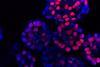
NewsLiver cancer organoids used to screen 1,600 potential treatments
Researchers at the University of Basel have screened more than 1,600 compounds using a biobank of 35 hepatocellular carcinoma organoids, identifying drug combinations that show selective anti-tumour activity across biologically diverse liver cancers.
-
 News
NewsBacterial enzyme found to weaken gut protective hormone signal
A bacterial enzyme produced by Bacteroides vulgatus has been shown to inactivate the intestinal hormone GLP-2, disrupting gut barrier function and aggravating colitis in a preclinical model — with a natural product inhibitor identified as a potential intervention.
-
 Article
Fast-tracking AI-designed binders with cell-free expression and SPR
AI can rapidly generate new protein binders, but wet-lab validation remains a major bottleneck. Combining cell-free protein synthesis with surface plasmon resonance (SPR) enables AI-designed antibody binders to be screened directly from crude extracts, bypassing lengthy cell culture and purification steps.
-
 News
NewsInsilico launches specialist AI models for drug discovery chemistry
Insilico Medicine has unveiled a suite of compact, domain-trained AI models targeting ADMET prediction, retrosynthesis and target activity across GPCR and kinase panels, claiming state-of-the-art results on more than 70 benchmarks.
-
 Article
Six assay requirements every researcher using NAMs should know
As NAMs become more widely used in drug discovery, assays must meet the demands of more complex models. Discover six requirements for reliable, reproducible and biologically meaningful data.
-
 Article
PROTACs vs molecular glues: which degrader fits your target?
PROTACs and molecular glues can both remove disease-associated proteins, but choosing between them is not simple. Our new Discovery Toolkit compares the options to help discovery teams choose the right strategy.
-
 News
NewsStem cell-grown kidney organoids could help uncover new treatments for AKI
Researchers at Monash University have grown miniature human kidneys from stem cells that could give drug discovery teams a more human-relevant model for investigating acute kidney injury and identifying therapies that promote tissue recovery.
-
 Article
600+ patient-derived cancer models expand the search for drug targets
Hundreds of new patient-derived cancer models could strengthen target validation, identify cancer vulnerabilities and provide more representative systems for preclinical drug discovery.
-
 News
NewsMulti-target screening refines ADC development for cervical cancer
A large-scale transcriptomic study has pinpointed distinct cell-surface targets for antibody-drug conjugate development across cervical cancer subtypes, revealing how tissue-of-origin comparisons and subpopulation analysis can uncover targets missed by conventional screening approaches.
-
 Article
Why intracellular targets remain a major drug discovery challenge – and how they’re becoming druggable
Many biologically important intracellular targets remain difficult to drug. Dr Rab Prinjha examines how screening within living cells could help tackle them.
-
 News
NewsAI identifies experimental drug targeting undruggable cancer protein
Mayo Clinic researchers have used AI to screen nearly 40,000 compounds and identify a small molecule inhibitor targeting GIPC1, a protein previously considered undruggable, with preclinical results showing slowed tumour growth and enhanced chemotherapy response.
-
 News
NewsAI and genetics identify WNK2 inhibitor for osteoarthritis treatment
Researchers at University of Utah Health have used artificial intelligence and human genetic data to identify a promising early-stage drug candidate targeting WNK2, a protein linked to inherited osteoarthritis, with the lead compound reducing inflammatory gene activity and supporting cartilage cell health in laboratory models.
-
 News
NewsNew molecular glue platform broadens E3 ligase targeting for cancer drug development
Researchers at Dana-Farber Cancer Institute have developed a scalable platform for discovering molecular glue degraders, reporting the first metabolically activated example and broadening the scope of targeted protein degradation in cancer.
-
 News
NewsResearchers develop AI system to accelerate tuberculosis drug discovery
Researchers at Texas A&M have developed AI-driven platforms to help scientists navigate the bottlenecks of tuberculosis drug discovery, from eliminating nuisance compounds to unlocking years of archived research data.