



All Oncology articles
-
 News
NewsVPS34 inhibition boosts GD2 visibility to enhance neuroblastoma immunotherapy
Penn State researchers have shown that inhibiting the protein VPS34 increases GD2 display on neuroblastoma cell surfaces, making tumours more visible to anti-GD2 antibodies and improving outcomes in preclinical combination studies.
-
 News
NewsKRAS inhibition and CTLA-4 blockade could overcome gastric cancer immunotherapy resistance
Researchers have identified oncogenic KRAS as a key driver of immunosuppression in gastric adenocarcinoma.
-
 News
NewsMathematical model reveals self-reinforcing mechanism behind HE-S2 ADC cancer therapy
A mathematical model developed by researchers from Mass General Brigham and the University of Cyprus suggests that the experimental immunomodulatory antibody-drug conjugate HE-S2 may become progressively more effective as it reduces tumour size.
-
 Article
Induced proximity drugs – why complex formation is not enough
A drug can form exactly the complex it was designed to make and still fail to work. Two recently approved induced proximity drugs show why what happens after complex formation – not formation alone – can decide the outcome.
-
 News
NewsVaccine adjuvant AS01 shown to induce trained immunity in monocytes
A preclinical study published in Myeloid Cells reports that AS01, a vaccine adjuvant system, can induce trained immunity in human monocytes and reduce tumour growth in selected mouse cancer models.
-
 News
NewsMayo Clinic strategy restores CAR T targets on aggressive thyroid tumours
Mayo Clinic researchers have shown that approved thyroid cancer drugs can restore a key antigen on aggressive tumour cells, making them visible once more to CAR T cells and improving treatment outcomes in preclinical models.
-
 News
NewsWhat SIRPα reveals about how breast cancer takes hold in the brain
Scientists at Wake Forest University School of Medicine have uncovered a previously unrecognised cancer-intrinsic role for SIRPα in triple-negative breast cancer, linking the cell-surface protein to mitochondrial fission, tumour-cell migration and suppression of the brain’s immune defences.
-
 News
NewsBig Picture Bio raises £2.2m to develop AI cancer combination therapies
UK-based cancer drug discovery company Big Picture Bio has closed £2.2 million in funding to advance AI-designed combination therapies into laboratory validation, using a generative world model to map complex tumour biology across disease sites and patient subgroups.
-
 News
NewsLiver cancer organoids used to screen 1,600 potential treatments
Researchers at the University of Basel have screened more than 1,600 compounds using a biobank of 35 hepatocellular carcinoma organoids, identifying drug combinations that show selective anti-tumour activity across biologically diverse liver cancers.
-
 News
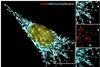
NewsSalk researchers uncover how interferons switch from anti- to pro-cancer
Researchers at the Salk Institute have identified a cellular pathway through which prolonged interferon exposure triggers mitochondrial dysfunction, PGE2 production and suppression of anti-tumour immunity – offering a potential strategy for overcoming immunotherapy resistance.
-
 News
NewsWhole-genome sequencing delivers actionable biomarkers in 73 percent of cancer patients
A large real-world study demonstrates that whole-genome sequencing can identify actionable biomarkers in nearly three-quarters of solid cancer patients.
-
 News
NewsPatient-derived tumour organoid biobank maps cancer gene dependencies
A biobank of 256 patient-derived tumour organoids, combined with genome-wide CRISPR–Cas9 screening, has produced a detailed map of cancer gene dependencies across five tumour types, revealing both shared vulnerabilities and mutation-specific targets with implications for precision oncology.
-
 News
NewsNew LOX target discovery could help overcome chemotherapy-resistant breast cancer
A preclinical study has identified lysyl oxidase as an intracellular survival factor in triple-negative breast cancer, with researchers demonstrating that sequentially blocking LOX and a compensatory ferroptosis defence pathway significantly suppresses tumour growth without chemotherapy.
-
 Webinar
What it really takes to turn cancer discoveries into new therapies
Five leading cancer researchers from across genomics, proteomics, cell biology, chemical biology and gene therapy dig into what’s driving cancer drug discovery forward and what’s still holding progress back.
-
 News
NewsReview challenges one-size-fits-all approach to OSCC drug delivery
A new review published in the European Journal of Pharmaceutics and Biopharmaceutics argues that no single local drug-delivery formulation will suit every oral squamous cell carcinoma tumour, urging researchers to anchor development in clinical and biological context from the outset.
-
 News
NewsRegnase-1 deletion boosts CAR T-cell efficacy against paediatric osteosarcoma
St Jude researchers have demonstrated that deleting the Regnase-1 gene from CAR T cells significantly improves tumour control and prevents metastasis in preclinical models of relapsed osteosarcoma, paving the way for an early-phase clinical trial.
-
 News
NewsHER3-DXd and olaparib combination boosts lung cancer treatment responses
A new preclinical study finds that combining the antibody-drug conjugate HER3-DXd with PARP inhibitor olaparib significantly improves treatment responses in NSCLC models, including those harbouring EGFR and KRAS mutations, by overwhelming DNA repair capacity and activating innate immune signalling.
-
 News
NewsFirst-in-class drug targets ‘undruggable’ MYC in blood cancers
A first-in-class experimental drug has demonstrated preclinical activity against treatment-resistant blood cancers by exploiting a newly identified vulnerability between MYC and GSPT1, offering a potential route to one of oncology’s most elusive targets.
-
 Article
600+ patient-derived cancer models expand the search for drug targets
Hundreds of new patient-derived cancer models could strengthen target validation, identify cancer vulnerabilities and provide more representative systems for preclinical drug discovery.
-
 News
NewsIL-17 identified as potential immunotherapy biomarker in ovarian cancer
A new study has identified IL-17 as a potential biomarker for immunotherapy response in a small subset of clear cell ovarian cancer cases, offering a possible route to personalised treatment for a disease historically resistant to immune-based therapies.