


Research and development
Explore research and development advances across molecular biology, genetics, immunology, pharmacology, neuroscience and emerging scientific disciplines, highlighting discoveries, technologies and translational approaches that drive innovation throughout the drug discovery and therapeutic development pipeline.
Webinars and whitepapers
- Previous
- Next






Research and development
 Article
Why targeted therapies are exposing the limits of animal models – and what comes next
Traditional preclinical models are struggling to keep pace with a new generation of targeted therapies. As regulators embrace new approach methodologies (NAMs), vascularised tissue platforms are offering a more human-relevant approach to predicting drug efficacy and safety.
 Article
From chemist to AI agent builder: inside the rise of agentic AI in drug discovery
Dr Raminderpal Singh speaks with Dr Srijit Seal about why specialised AI agents are outperforming general-purpose models in drug discovery and what a new consortium paper shows about their use in practice.
 Article
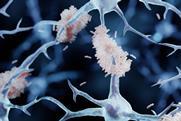
Beyond tangles: why soluble intracellular tau should guide drug discovery
Tau tangles are a hallmark of Alzheimer’s disease and related disorders, but evidence suggests the real damage may come from rare, soluble tau species inside neurons. Targeting these hidden drivers of circuit dysfunction could be key to restoring memory and cognition.
 Article
Why AI models need patient data to deliver in drug discovery
Despite rapid advances in AI, many drug discovery models still struggle to translate computational predictions into clinical outcomes. Thomas Clozel explains how Owkin is training AI on large-scale patient-derived data while integrating experimental and clinical validation directly into model development.
Join now
Unlock exclusive industry insights
- Bookmark articles and resources to access anytime
- Enjoy free access to industry leading resources, webinars and insights
- Stay informed with the latest news and breakthroughs
- Receive updates and recommendations tailored to your research interests
 Article
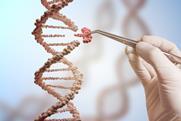
Turning GWAS signals into drug targets with scalable CRISPR
Genome-wide association studies have linked thousands of genetic variants to disease, yet most remain disconnected from drug-relevant biology. Neville Sanjana, Professor at New York University and Core Faculty Member at the New York Genome Center, explains how scalable CRISPR screens systematically link noncoding variants to causal genes and therapeutic targets.
 Article
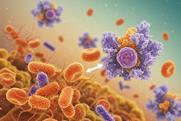
When antibiotics are not enough: the case for immune-engaging therapies
As antimicrobial resistance grows and patient populations become more complex, the limitations of antibiotics are becoming harder to ignore. Dr Helen Bright, CSO at Centauri Therapeutics, discusses a new approach that targets both the pathogen and the host.
 Article
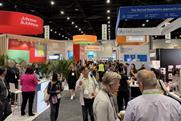
AACR 2026 part 1: AI design, precision biology and the next wave of oncology innovation
At AACR 2026, industry leaders discussed how oncology R&D is moving beyond isolated technological advances towards integrated discovery systems.
 Article
Women in STEM: resilience and leadership in rare disease research
Rare neurological diseases remain one of the most challenging areas in drug discovery, with many patients still lacking treatment options. Dr Nitza Thomasson discusses returning to Servier to lead its rare neurology therapeutic area and explains why resilience, curiosity and persistence are essential for those looking to build a meaningful career in STEM.
 Article
Why lower organisms matter for neurodegeneration drug discovery
In the wake of recent government policy aimed at actively replacing animal models in drug discovery, we consider a possible solution to the translational shortfalls of current cellular methodologies for neurodegenerative disease.
 Article
Variant or viable target? How resolving complex genomic regions is reshaping rare disease therapeutics
Dr Aaron Wenger reveals how improvements in long-read sequencing technology is enabling the elucidation of complex disease mechanisms for targeted and effective treatments for rare diseases.
 Article
AI builds dual-action cancer drug targeting PKMYT1
Research published in Nature Communications shows how generative AI can be used to design complex dual-action cancer drug candidates. Insilico Medicine has developed a PKMYT1 degrader that both eliminates the target protein and blocks its activity, demonstrating the growing role of AI in advanced drug discovery.
 Article
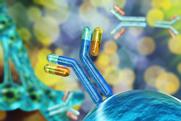
AI to antibody in days: breaking the wet lab bottleneck via high-throughput integration
AI is accelerating drug discovery at an unprecedented pace. Thousands of antibody candidates can now be designed in silico within hours. The challenge now is keeping experimental workflows fast enough to keep up. High-throughput expression and integrated developability assessment are making it possible to move from sequence to data in days.
 Article
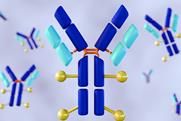
Improving selectivity in antibody–drug conjugates
Promatix Biosciences is developing a new generation of bispecific antibody–drug conjugates using proprietary membrane proteomics data to identify highly selective target pairings. CEO Dr Michael Hunter explains how the company’s TXPro database enables discovery of previously unexplored tumour biology to improve therapeutic index and reduce on-target/off-tumour toxicities in solid tumours.
 Article
Turning CRISPR hits into confident drug discovery decisions
Functional genomics is central to modern drug discovery, yet high attrition rates persist. In this article, Dr Salman Tamaddon-Jahromi, a postdoctoral research associate at the University of Cambridge, discusses how end-to-end CRISPR screening strategies, iPSC-derived neuronal models and layered quality control can convert functional genomics signals into actionable therapeutic hypotheses.
 Report
Organoids and Organ Chips: Improving Decision-Making in Early Drug Discovery
Traditional preclinical models do not always predict what will happen in patients. This report explores how organoids, organ-on-chip systems and advanced imaging are being used to generate more clinically relevant insights and support better decision-making earlier in drug discovery.
 Article
Beyond serendipity: rational design and AI’s expansion of the undruggable target landscape
For decades, drugging the ‘undruggable’ was thought to require luck rather than logic. Today, AI is transforming serendipity into strategy by enabling rational, data-driven approaches to previously inaccessible targets.
 Article
From fragments to maps: scaling drug–target interaction data
Most drug–target data were never designed to be compared at scale. Pharmome mapping takes a different approach, building a shared dataset intended to support more predictable discovery.
 Report
CRISPR & Genomics: Turning Data into Confident Drug Discovery Decisions
Early drug discovery has no shortage of genomic data, but confidence remains scarce. This report examines how CRISPR, functional genomics and human-relevant models are being applied to determine which signals matter, how they influence disease biology and which targets and strategies are worth pursuing.
 Interview
Computational design drives new generation of synthetic promoters
Designing gene control from scratch is becoming possible. SynGenSys is using computational design to create synthetic promoters for advanced therapies.
 Interview
Physics-based modelling offers a new way to study drug targets
Australian start-up OmnigeniQ has demonstrated what it describes as the first deterministic, physics-based computation of a human protein in its native state.