
Automation is helping drug discovery teams screen faster, cut costs and run complex assays at scale – but its real value lies in what happens next.
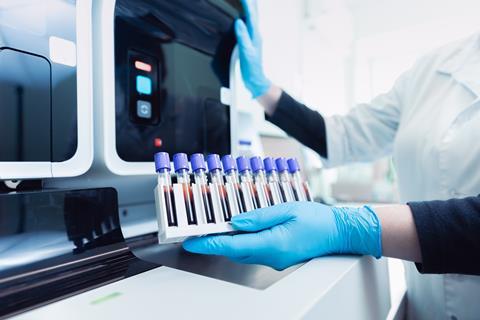
Automation has shifted from being a support tool in drug discovery to becoming one of its defining engines of progress. It does far more than speed up manual tasks; it enables scientists to work at greater scale, with higher precision and faster turnaround, while freeing research teams to focus on strategy and interpretation instead of repetitive processes. The true value of automation lies in enabling questions to be asked and answered that manual methods could never support.
To understand where this transformation is leading, we spoke with Rob Howes, Senior Director at Charles River in Cambridge, UK. His career spans biotech, big pharma and national public health initiatives, including a pivotal role at the UK Health Security Agency during the COVID-19 pandemic. These varied experiences have given him a unique perspective on both the challenges and opportunities of embedding automation into discovery.
From pandemic pressure to discovery potential
Few events have tested laboratories like the COVID-19 pandemic. For Howes, it became a live demonstration of what is possible when urgency and focus meet automation.
The experience of the COVID-19 response was a unique opportunity to see what we could achieve under extraordinary circumstances.
“The experience of the COVID-19 response was a unique opportunity to see what we could achieve under extraordinary circumstances. What we achieved was done with a clear focus, a clear endpoint and collaboration across the industry.”
Teams were forced to remove bottlenecks that might once have been tolerated. Data had to be turned around at unprecedented speed, with new approaches tested and either integrated or discarded within 24 hours.
“That allowed us to assess whether those improvements would make a significant difference or an incremental difference and to bake them into our process.”
This iterative cycle enabled a shift from a moderate-throughput assay to a genuinely high-throughput system. The cost per assay dropped, but quality was not sacrificed.
The primary driver during the pandemic was the turnaround time to ensure that we got results back to the UK population.
“The primary driver during the pandemic was the turnaround time to ensure that we got results back to the UK population. We had to balance this with maintaining the quality of our service while we rapidly scaled up our capacity to meet the demand.”
What he took from this was a new sense of possibility. With clear focus, rapid iteration and collaboration across the industry, automation can deliver more than incremental gains – it can redefine capability in the earliest stages of discovery.
The challenge of hit identification
At Charles River, Howes leads both the Hit Identification and Enabling Platforms teams. This places him at the heart of one of discovery’s most resource-intensive phases: identifying promising hits from vast compound libraries.
The ambition here is simple to describe but difficult to achieve. Researchers want to screen as many leads as possible, at high quality, low cost and fast turnaround. Only automation makes this balance feasible.
The increasing number of cellular assays provides real opportunities for automation to increase the throughput of complex cellular assays such as organoids.
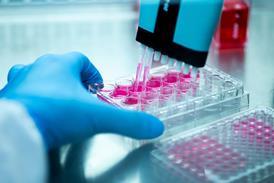
Miniaturisation is a key tactic. Most assays are run in 384- or 1536-well formats, making them compatible with existing automated systems. Smaller volumes mean more data per plate and reduced reagent use, but they also demand precise handling and dispensing.
There are also significant logistical pressures: compounds must be formatted and added in a consistent and timely manner to keep projects on schedule.
Howes highlights cellular assays as an area of growing promise. These systems, particularly organoids, are vital for modelling complex biology. They were once too slow and labour-intensive for large-scale screens, but automation is beginning to change that.
“The increasing number of cellular assays provides real opportunities for automation to increase the throughput of complex cellular assays such as organoids,” he says.
By scaling up organoid experiments, researchers can tackle questions that would previously have been out of reach. Automation is not simply a matter of efficiency – it expands what science can do.
Lessons learnt: technologies that drive discovery
Drawing on his career across pharma, biotech and government labs, Howes points to certain automation strategies that consistently accelerate discovery.
Compound management is one. Without reliable systems that provide test samples to assays, even the most sophisticated downstream processes falter.
Another and perhaps the most transformative in recent years, is dispensing technology.
The biggest change over the past 10 years has been the adoption across the industry of non-contact dispensing.
“The biggest change over the past 10 years has been the adoption across the industry of non-contact dispensing. This has really revolutionised both the throughput and cost of assays but also has a significant environmental impact by reducing amounts of plastics and solvents utilised,” he says.
By moving away from traditional pipetting methods, laboratories can reduce consumable waste, cut solvent use and save money while simultaneously increasing speed. In this respect, sustainability and efficiency go hand in hand.
Still, technology alone is not enough.
“Once you have this, you can use it to define what you are trying to achieve and align your automation accordingly,” he reveals. “Without this understanding you may have some really fabulous automation but not get the best output from it.”
Automation delivers the most value when it is built on a detailed understanding of each process. Otherwise, even expensive systems may fail to yield the desired benefits.
Integration: modular vs monolithic automation
Bringing automation into individual assays is one thing; integrating it across R&D workflows is another. For Howes, the solution lies in modular design:
“Large integrated systems that do one thing well are fantastic in a more process-focused area such as manufacturing; in the discovery space modular automation has been critical, allowing the flexibility needed both within a particular project as it progresses but also across a range of projects across a portfolio.”
Manufacturing thrives on standardisation and repeatability, making large, monolithic systems effective. Discovery, however, is unpredictable. Assays evolve, projects shift direction and priorities change. Modular automation allows researchers to adapt by swapping instruments, reconfiguring workflows and scaling capacity as needed.
This adaptability makes automation suitable not only for large companies, but also for smaller organisations that need to extract maximum value from every piece of equipment.
Automation across different settings
Having worked in startups, multinational pharma and national public health labs, Howes has seen automation used in strikingly different ways:
- Government laboratories often operate at extremes. Some focus on very high throughput for a limited set of assays, while others build highly integrated systems that can run multiple assays in parallel. In both cases, the priorities are quality and rapid return of data.
- Biotechs typically begin with semi-automation, but Howes notes a trend towards designing automation in from the outset. This forward planning makes it easier to scale smoothly as projects grow.
- Large pharma faces the greatest scale and complexity. Automation is essential for handling massive compound libraries, running large primary screens and coordinating multiple projects across wide portfolios.
Despite their differences, these settings can learn from one another.
“There is definitely something to be learned across these different areas,” reflects Howes. “I think some of the systems, for example in the public health area, are really neat in terms of having preset and walkaway automation – similar setups could be used in some of the earlier stage organisations.”
The core lesson is consistency: identify the key processes, automate as much as possible and preserve flexibility.
“One of the key things across all of the areas is understanding your key process and automate as much as possible while trying to retain flexibility,” he says.
Emerging trends that could redefine discovery
Looking forwards, Howes is particularly interested in new system architectures that increase flexibility:
“There have been some really interesting developments in lab automation over the past few years that will have an impact on early-stage discovery. There are quite a few systems now that are moving us away from track-based movement of plates to more of a benchtop system and I think that will help to achieve the flexibility that we need in the early Discovery space.”
One of the biggest areas that I think is ripe for development is looking beyond the standard SBS format plate we have been using. This format has been massively successful but does have some limitations.
Track-based systems have long been popular, but they can be inflexible. Benchtop systems, combined with advanced scheduling software, allow teams to swap peripherals and reconfigure workflows with ease.
A second frontier lies in assay formats.
“One of the biggest areas that I think is ripe for development is looking beyond the standard SBS format plate we have been using. This format has been massively successful but does have some limitations,” Howes admits. “Microfluidics have been around for quite a long time but we have yet to adopt that in a significant way in the early discovery space, outside of a few specialist techniques.”
Moving beyond the SBS plate format could open up microfluidics to mainstream use, allowing ultra-miniaturised assays, reduced reagent consumption and new biological insights.
A future defined by focus and flexibility
Reflecting on the arc of automation across his career, Howes returns to several central themes:
- Clarity of purpose: automation delivers the most when tied to well-defined goals
- Process understanding: without it, even advanced systems underperform
- Flexibility: modular designs are essential in dynamic R&D environments
- Collaboration: breakthroughs often come from sharing approaches across organisations and sectors.
Automation is no longer a secondary consideration; it is a foundation of how early discovery is carried out. It saves time and resources but, more importantly, it enables science that would not otherwise be possible.
“Having that clear focus about what you are trying to achieve and collaborating with others across the industry means that we should be able to produce real changes in early stages of discovery.”
About the expert
 Rob joined Charles River after three years supporting the UK’s Covid-19 response. He was CEO and Site Director of the Rosalind Franklin Laboratory, which delivered more than 175,000 PCR tests per day for the UK Health Security Agency and Director of the Cambridge Covid-19 Testing Centre during the early stages of the pandemic.
He previously spent eight years at AstraZeneca, leading teams in biologics profiling and discovery biology, with a focus on cardiovascular, metabolic and respiratory diseases. Earlier, he worked at Vernalis and was a founding employee at Horizon Discovery, where he directed research and built collaborations with more than 50 academic groups worldwide.
Rob is a Fellow of the Royal Society of Biology and of the Society for Laboratory Automation and Screening (SLAS). He serves on the Board of ELRIG, the editorial board of SLAS Discovery and has presented at more than 30 scientific conferences.